Airplane Tracking with YOLOv8
Airplane Tracking with YOLOv8 is a computer vision notebook for detecting and tracking aircraft in video using Ultralytics YOLOv8 and a Kaggle compatible workflow. What it does The notebook processes an input aircraft vi...
Category
Agentic SystemsAutomationAI Engineering
Client
Personal computer vision research
Publication Date
December 15, 2025
Developer
giovanniromero.dev
Project Description
Airplane Tracking with YOLOv8 is a computer vision notebook for detecting and tracking aircraft in video using Ultralytics YOLOv8 and a Kaggle-compatible workflow.
What it does
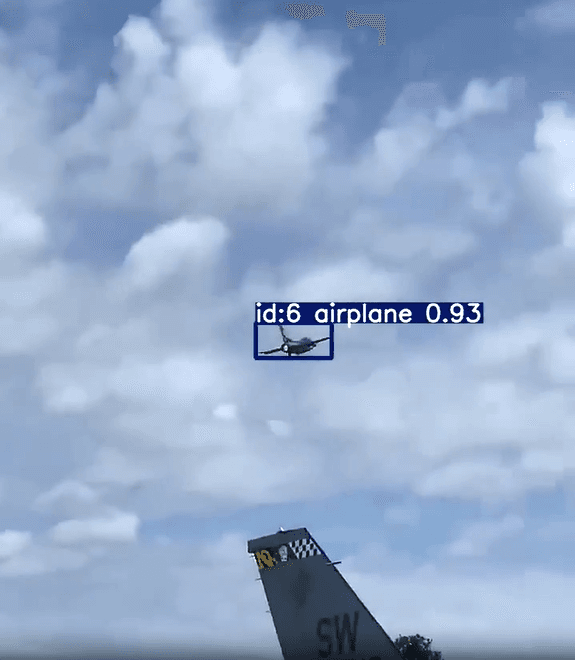
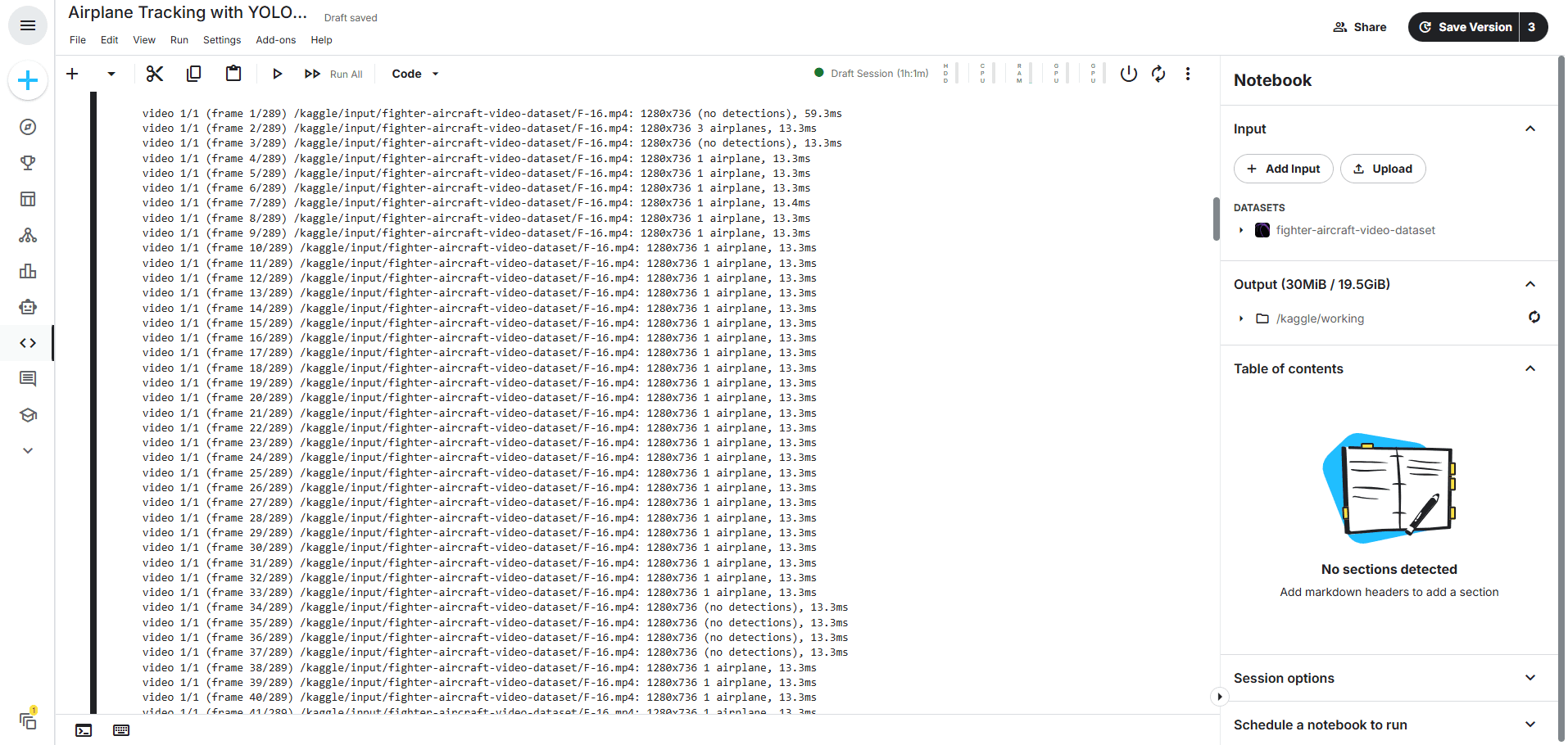
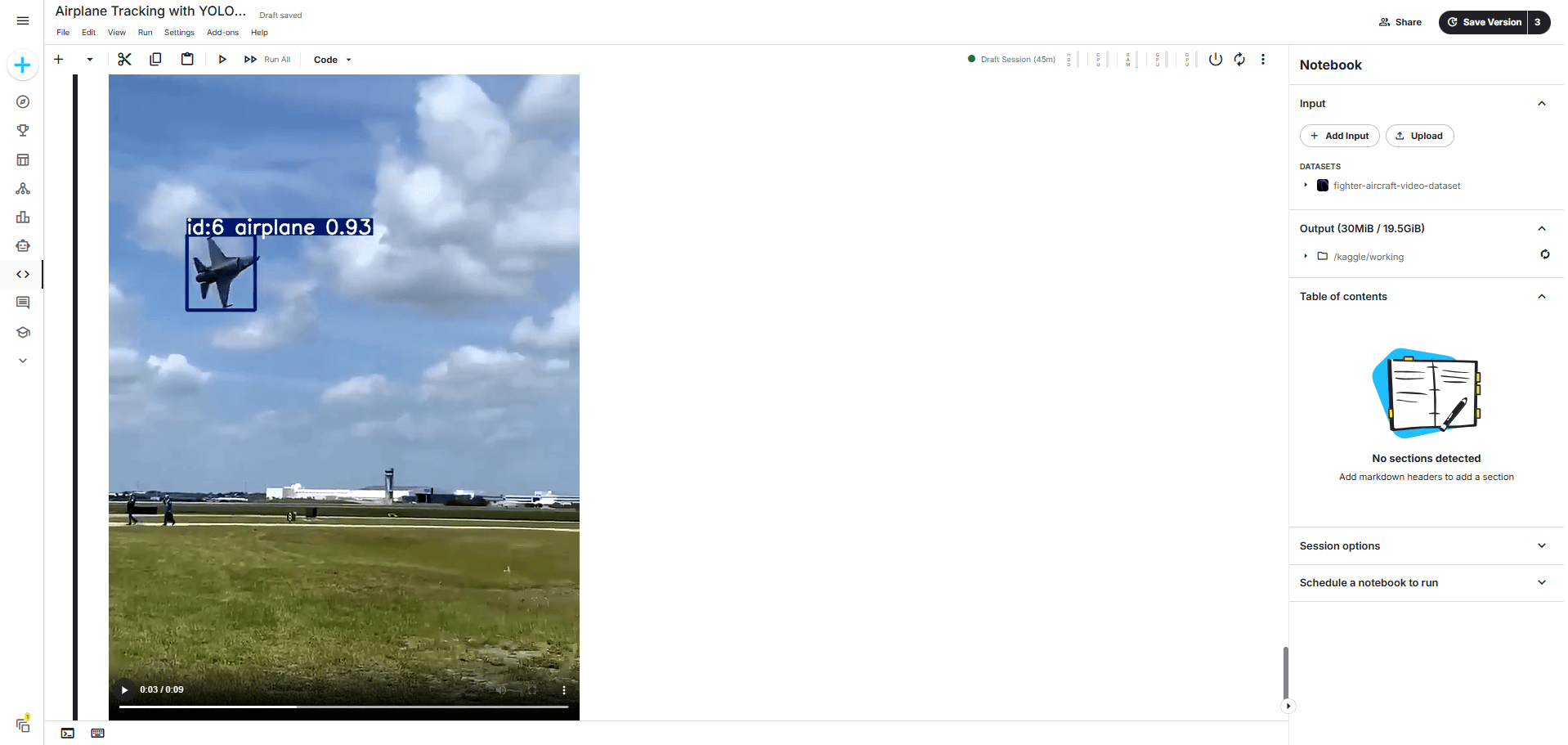
The notebook processes an input aircraft video, detects airplanes frame by frame, tracks the object trajectory across the sequence, saves the annotated YOLO output, converts the generated AVI artifact to MP4, and displays the final result directly in the notebook.
Implementation details
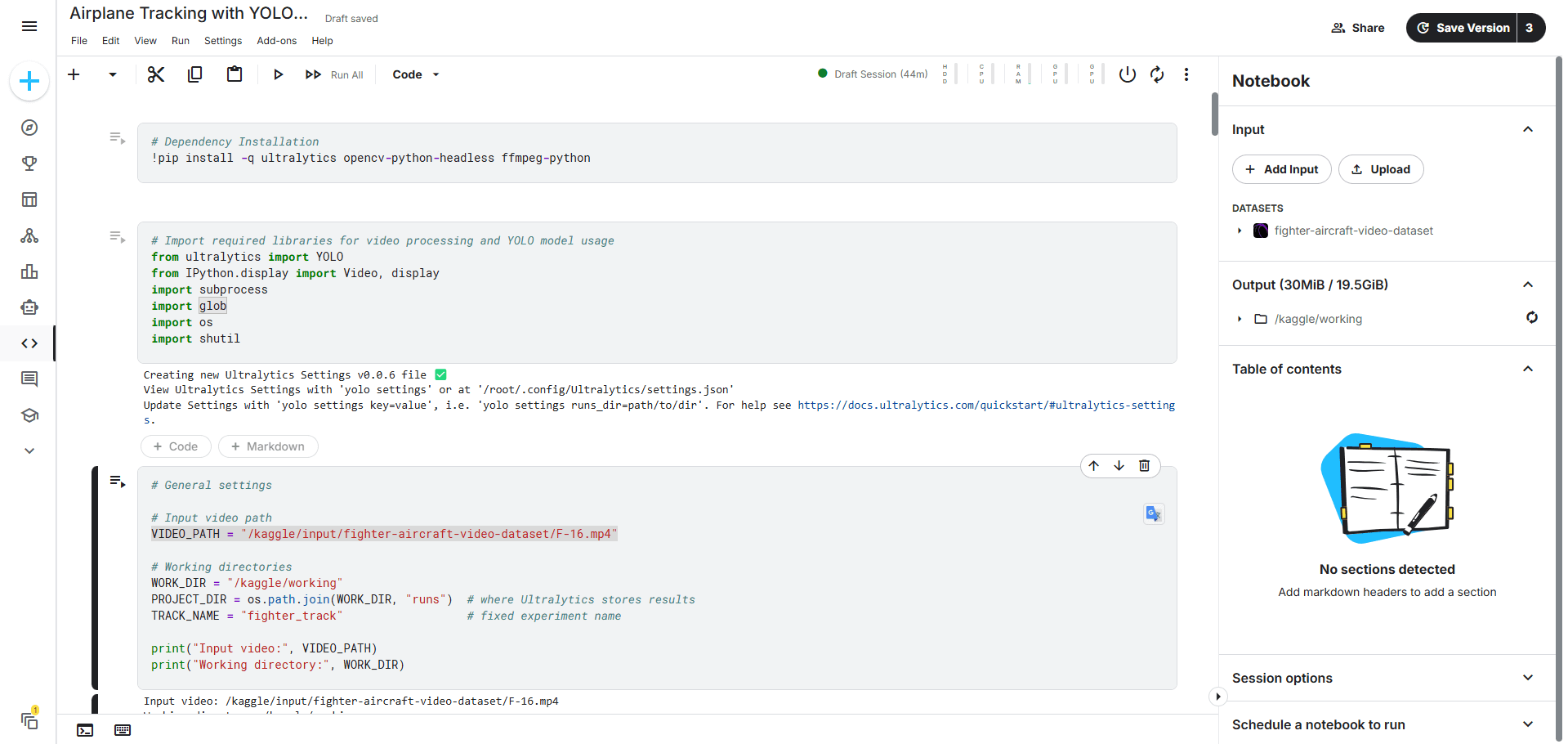
- Uses YOLOv8n through the Ultralytics Python package.
- Filters detections to COCO class 4, which corresponds to airplanes.
- Runs tracking with BoT-SORT using persistent tracking across frames.
- Applies a configurable confidence threshold, currently set to 0.20, and an image size of 1280 for detection quality.
- Cleans previous runs so the notebook produces a single repeatable output artifact.
- Converts the YOLO-generated AVI file to result.mp4 with ffmpeg for easy preview and sharing.
Technical stack
Python, Ultralytics YOLOv8, OpenCV, ffmpeg-python, Jupyter Notebook, Kaggle runtime, IPython display utilities, and video-processing automation.
What it demonstrates
This project demonstrates applied computer vision, model-based object detection, video-processing pipelines, reproducible notebook workflows, and practical automation around ML inference outputs.
SEO and Implementation Notes
This project documents a computer vision workflow for detecting and tracking airplanes with YOLOv8. It combines dataset preparation, model inference, visual validation, and result presentation into a compact technical case study. The goal is to show how modern object detection can be applied to aviation imagery while keeping the implementation understandable for developers evaluating practical AI use cases.
The project is relevant for readers interested in AI-assisted monitoring, visual automation, model evaluation, and production-oriented experimentation with Python-based computer vision tooling.
Practical Validation
For a reliable computer vision workflow, the model output should be reviewed against varied image conditions such as distance, partial occlusion, lighting changes, and background noise. The project is most useful when the detection result is paired with clear confidence thresholds, repeatable test inputs, and visual examples that make the model behavior easy to inspect. This keeps the work grounded as an engineering case study rather than only a model demo.