 giovanniromero.dev
Understanding Hallucinations in AI: Causes, Examples, and Solutions
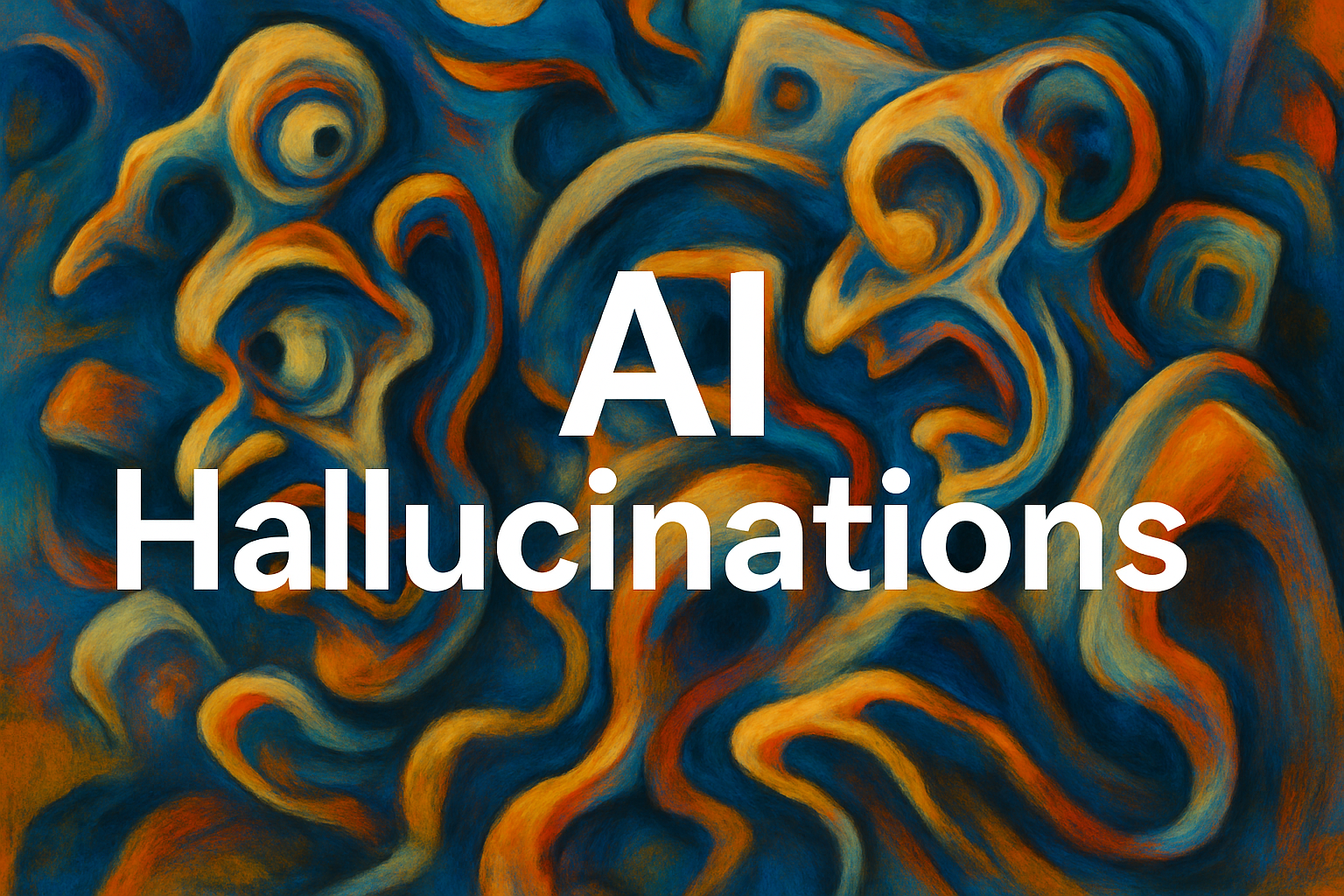
Artificial Intelligence (AI) has made remarkable strides in recent years, but one of the perplexing challenges it faces is the phenomenon known as "hallucinations." In the context of AI, hallucinations refer to instances where a model generates outputs that are not grounded in reality, leading to misinformation or nonsensical results. This article will explore the causes of hallucinations in AI, provide examples, and discuss potential solutions to mitigate this issue.
What Are Hallucinations in AI?
Hallucinations in AI occur when a model produces information that is inaccurate, fabricated, or not based on its training data. This can happen in various types of AI, including natural language processing (NLP) models, image generation systems, and more. Understanding the underlying mechanisms that lead to hallucinations is crucial for improving AI reliability.
Types of Hallucinations
- Textual Hallucinations: These happen in NLP models where the generated text diverges from factual accuracy.
- Visual Hallucinations: In computer vision, models might create images that do not correspond to any real-world object.
- Audio Hallucinations: AI may generate sounds or speech that do not exist in reality.
Causes of Hallucinations in AI
Understanding the causes of hallucinations can help developers create better models. Here are some key factors:
1. Data Quality
The quality of the training data is paramount. If the dataset contains inaccuracies or biases, the model will likely produce hallucinated outputs.
Example:
If an NLP model is trained on a dataset filled with misinformation, it may generate text that is misleading or factually incorrect.
2. Model Architecture
The architecture of the AI model can also contribute to hallucinations. Complex models with many parameters might overfit the training data, leading to bizarre outputs.
Example:
A transformer model with excessive layers may learn to produce coherent text but fail to maintain factual accuracy.
3. Lack of Context
AI models often struggle with understanding context, which can lead to hallucinations when they attempt to generate responses without sufficient information.
Examples of Hallucinations in AI
1. ChatGPT and Misinformation
ChatGPT, an NLP model by OpenAI, has been known to produce responses that sound convincing but contain factual inaccuracies. For example, when asked about historical events, it may fabricate details or misrepresent facts.
2. DALL-E and Non-Existent Objects
DALL-E, an image generation model, might create images of objects that do not exist or combine unrelated elements in a way that defies logic.
Steps to Mitigate Hallucinations
1. Improve Data Quality
Ensuring that the training data is accurate and diverse can significantly reduce the chances of hallucinations. This includes filtering out incorrect information and including a variety of perspectives.
2. Model Fine-Tuning
Fine-tuning models on specific datasets that are highly relevant to the tasks can help improve their accuracy and reduce hallucinations.
3. Incorporate Feedback Loops
Implementing feedback mechanisms allows models to learn from their mistakes, thus reducing the likelihood of generating hallucinated outputs in the future.
Pitfalls to Avoid
1. Over-Reliance on AI
Users should not rely solely on AI outputs, especially for critical tasks. Always verify information generated by AI models.
2. Ignoring Model Limitations
Understanding the limitations of AI models is crucial. Overestimating their capabilities can lead to misuse and trust issues.
Optimization Strategies
1. Regular Updates
Regularly updating models with new data can help in reducing hallucinations by providing the latest information and correcting past inaccuracies.
2. Ensemble Methods
Using ensemble methods, where multiple models are combined to produce outputs, can help in cross-verifying information and reducing the chance of hallucinations.
Conclusion
Hallucinations in AI represent a significant challenge that can undermine the reliability of AI systems. By understanding their causes and implementing effective strategies to mitigate them, we can enhance the accuracy and trustworthiness of AI models.
Key Takeaways
- Hallucinations in AI occur when models generate inaccurate or fabricated outputs.
- Causes include poor data quality, model architecture, and lack of context.
- Examples include ChatGPT's misinformation and DALL-E's creation of non-existent objects.
- Mitigation strategies involve improving data quality, fine-tuning models, and implementing feedback loops.
- Users should verify AI outputs and understand model limitations to avoid pitfalls.
Leave a Reply
Your email address will not be published. Required fields are marked *


Comments