 giovanniromero.dev
Multi-Agent Architecture: Chain of Thought/Agent
Introduction to Multi-Agent Architecture Multi-agent architecture refers to a system where multiple agents interact and collaborate to solve complex problems. In this context, we'll explore how to implement a chain...
Introduction to Multi-Agent Architecture
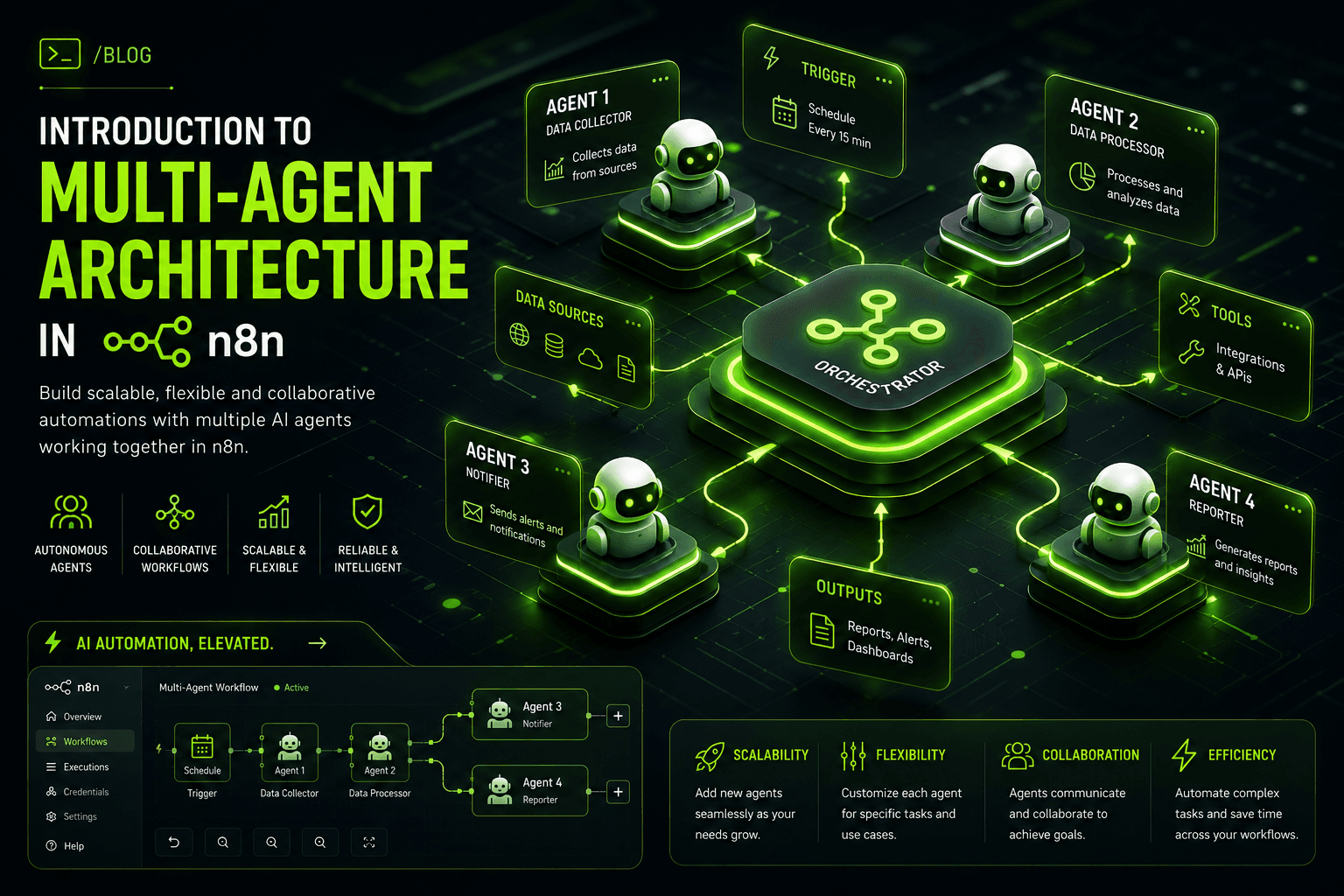
Multi-agent architecture refers to a system where multiple agents interact and collaborate to solve complex problems. In this context, we'll explore how to implement a chain of agents in n8n, optimizing workflows without redundancies.
What is the Chain of Agents?
The chain of agents is an approach where multiple agents work sequentially to process information and generate results. Each agent may have its own logic and tools, allowing for greater flexibility and adaptability in the workflow.
Key Features
- Sequential Interaction: Agents are executed one after another, allowing the output of one agent to become the input of the next.
- Memory and Tools: Each agent can possess its own memory and tools, enabling them to perform specific tasks efficiently.
Implementing the Chain of Agents in n8n
To implement a chain of agents in n8n, it is essential to structure the workflow so that each agent performs a clear and defined function.
Steps for Implementation
- Define the Trigger: Establish an event that initiates the chain of agents.
- Configure Agents: Each agent must be configured with the necessary tools and specific logic.
- Agent 1: Initial data processing.
- Agent 2: Result analysis.
- Agent 3: Report generation.
- Connect Agents: Ensure that the output of one agent becomes the input of the next.
- Optimize the Flow: Review the flow to eliminate redundancies and ensure that each agent is performing unique tasks.
Example Workflow
A practical example of a chain of agents could be the following:
- Data Input: An agent receives data from a form.
- Data Analysis: The second agent analyzes the data and extracts relevant information.
- Report Generation: The third agent uses the analyzed information to create a final report.
Workflow Visualization
- Input → Agent 1 → Agent 2 → Agent 3 → Final Output
Benefits of Using a Chain of Agents
Implementing a chain of agents in n8n offers several benefits:
- Efficiency: Each agent specializes in a task, improving the overall efficiency of the workflow.
- Scalability: Agents can be easily added or modified without affecting the system as a whole.
- Flexibility: The architecture allows for adjustments to the logic of each agent according to project needs.
Conclusion
The implementation of a chain of agents in n8n allows for the creation of complex and efficient workflows. By clearly defining the functions of each agent and optimizing the flow, significant results can be achieved without redundancies. This approach not only enhances efficiency but also provides a solid foundation for the development of more advanced systems in the future.
Key Takeaways
- A chain of agents allows for sequential processing of tasks.
- Each agent can be tailored with specific logic and tools.
- Proper configuration and connection of agents are essential for workflow efficiency.
- The architecture supports easy scalability and flexibility in project requirements.
Want help applying this in your stack?
I can help translate the pattern, workflow, or architecture described here into a practical AI agent, automation, API integration, or full-stack implementation.
Leave a Reply
Your email address will not be published. Required fields are marked *
Comments