 giovanniromero.dev
Multi-Agent Architecture in n8n.
Introduction to Multi-Agent Architecture In the era of automation and sophisticated workflow management, the concept of Multi-Agent Architecture MAA has gained significant traction. This architectural paradigm...
Introduction to Multi-Agent Architecture
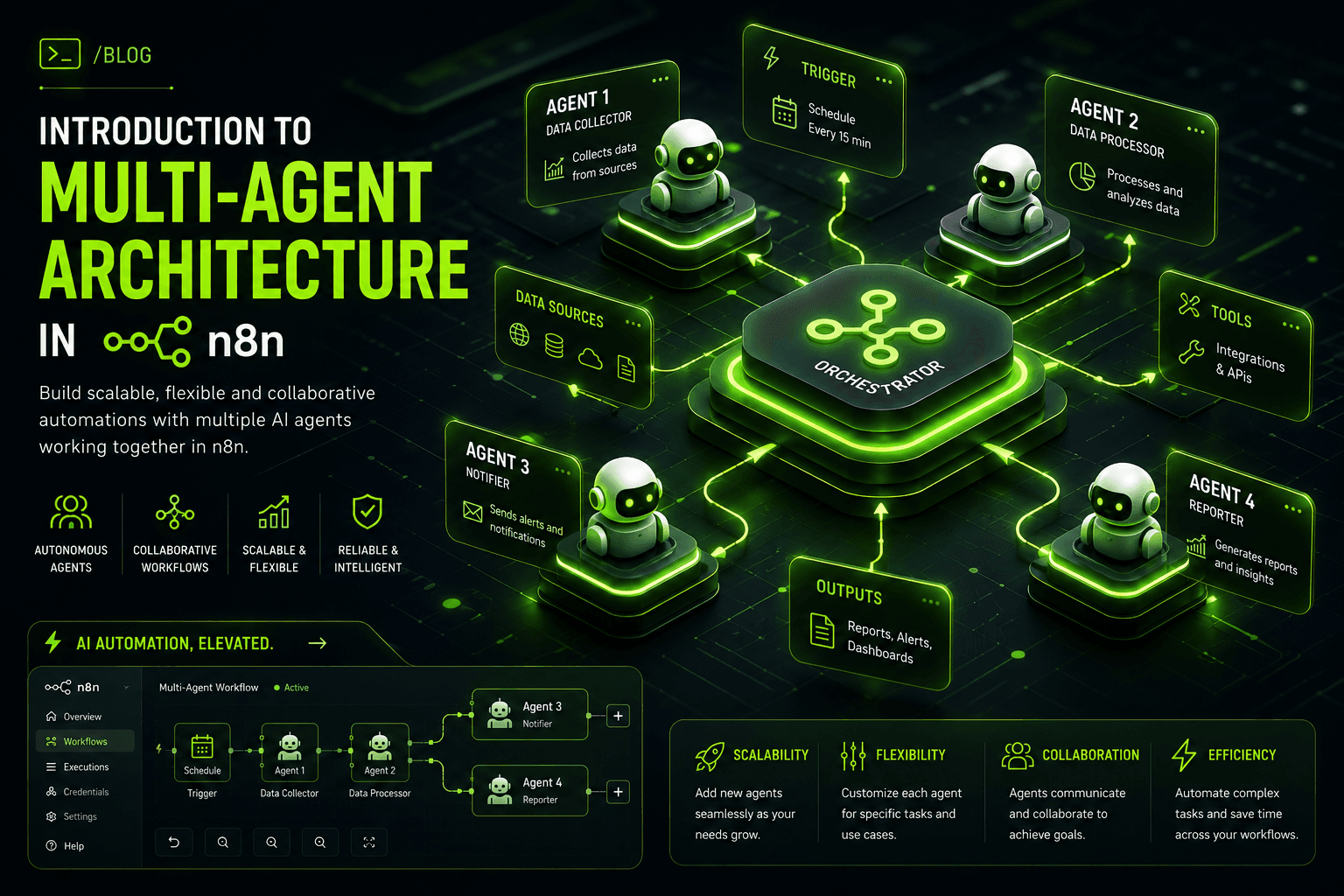
In the era of automation and sophisticated workflow management, the concept of Multi-Agent Architecture (MAA) has gained significant traction. This architectural paradigm involves multiple autonomous agents that can interact and collaborate to achieve complex tasks. In the context of automation tools like n8n, MAA enhances the ability to streamline processes, improve efficiency, and facilitate better collaboration across different systems.
n8n is an open-source workflow automation tool that allows users to connect various applications and services through workflows. By leveraging the power of Multi-Agent Architecture, n8n enables users to create dynamic and scalable workflows that can adapt to various needs and scenarios. This guide will explore the key features, implementation strategies, use cases, and challenges associated with Multi-Agent Architecture in n8n.
Key Features of Multi-Agent Architecture in n8n
Scalability
One of the primary advantages of Multi-Agent Architecture is its inherent scalability. In n8n, workflows can be designed to accommodate an increasing number of agents, allowing for the distribution of tasks and resources effectively.
When a workflow requires more processing power or needs to handle additional tasks, new agents can be introduced without disrupting existing operations. This scalability ensures that n8n workflows can grow alongside business requirements, providing a robust solution for automation needs.
Flexibility
The flexibility of Multi-Agent Architecture in n8n is another key feature that sets it apart. Users can customize agents to suit specific tasks, adapting workflows to meet various use cases. For instance, you can create agents that handle data retrieval, processing, or notification tasks, each with its unique configurations and capabilities.
This level of customization allows organizations to tailor their workflows to their unique needs, ensuring that they can respond swiftly to changes in business processes or market demands. Whether you need a simple task automation or a complex data integration solution, n8n's multi-agent capabilities make it possible.
Collaboration
Collaboration is at the heart of Multi-Agent Architecture. In n8n, agents can interact and communicate with one another, enabling the creation of collaborative workflows. For example, one agent might be responsible for monitoring social media channels, while another processes the collected data and generates insights.
This collaborative approach enhances the efficiency of workflows, as tasks can be distributed among agents that specialize in different areas. Use cases for collaborative workflows in n8n include customer support automation, where agents can work together to respond to inquiries in real time, or marketing campaigns that require coordination across multiple platforms.
Implementing Multi-Agent Architecture in n8n
Setting Up Agents
To implement Multi-Agent Architecture in n8n, you need to create and configure agents effectively. Here’s a step-by-step guide to setting up agents:
- Define the Purpose of Each Agent: Before creating agents, clarify the specific tasks each one will handle within your workflow.
- Create Agents in n8n: Use the n8n user interface to create new agents. Each agent can be configured with specific triggers, actions, and conditions.
- Configure Agent Settings: Customize each agent's settings according to its designated role. This includes defining how it interacts with other agents and what data it processes.
- Test Agent Functionality: Run tests to ensure that each agent performs its tasks correctly and interacts smoothly with other agents in the workflow.
- Deploy and Monitor: Once everything is set up, deploy the agents and monitor their performance to ensure they are functioning as expected.
Best practices for agent configuration include keeping workflows modular, ensuring clear communication protocols between agents, and regularly reviewing and optimizing agent performance.
Integrating with Existing Workflows
Integrating new agents into existing n8n workflows requires careful planning and execution. Here’s how to do it:
- Assess Current Workflows: Evaluate your existing workflows to identify areas where agents can add value.
- Identify Integration Points: Determine where new agents can be introduced to enhance functionality or efficiency.
- Modify Workflows: Adjust your workflows to incorporate the new agents, ensuring that they align with the overall process.
- Test Integration: Conduct tests to validate that the integration works seamlessly and that agents collaborate effectively with existing components.
Successful integrations often involve creating agents that fill specific gaps in the workflow, such as automating repetitive tasks or enhancing data processing capabilities.
Use Cases for Multi-Agent Architecture in n8n
Business Process Automation
Multi-Agent Architecture has been successfully implemented in various business process automation scenarios. For instance, a marketing agency might use n8n to automate lead generation processes. By deploying agents that handle data collection from forms, manage email notifications, and update CRM systems, businesses can streamline their workflows significantly.
Case studies show that companies implementing multi-agent systems in n8n have observed increased efficiency and reduced operational costs. Agents can work around the clock, handling tasks that would otherwise require human intervention, thus freeing up employees for more strategic activities.
Data Processing and Analysis
Another critical use case for Multi-Agent Architecture in n8n is data processing and analysis. Organizations often deal with vast amounts of data that require timely processing and insightful analysis. Using agents, n8n can automate data retrieval from various sources, perform transformations, and generate reports.
For example, a data analytics firm might deploy agents to extract data from APIs, clean and process it, and then feed it into visualization tools. This automated approach significantly reduces the time from data collection to insight generation, allowing businesses to make informed decisions faster.
Challenges and Considerations
Complexity Management
While Multi-Agent Architecture offers numerous benefits, managing the complexity of such systems can be challenging. As the number of agents increases, so does the potential for miscommunication and errors. To address this, organizations should implement robust monitoring tools and strategies to manage complexity effectively.
Using n8n’s built-in monitoring features, users can track the performance of each agent, identify bottlenecks, and troubleshoot issues as they arise. Additionally, clear documentation of workflows and agent roles can help mitigate complexity and ensure smooth operations.
Performance Optimization
Optimizing performance in multi-agent workflows is crucial for maintaining efficient operations. Here are some tips:
- Limit the Number of Active Agents: Only activate agents that are necessary for the workflow to avoid resource strain.
- Optimize Data Handling: Ensure that agents are efficient in data processing to minimize delays.
- Regularly Review Workflows: Periodically assess workflows for potential improvements and eliminate redundant processes.
Common pitfalls to avoid include overcomplicating workflows and neglecting performance monitoring, which can lead to inefficiencies and errors in automation.
Conclusion
In conclusion, Multi-Agent Architecture in n8n presents a powerful approach to automation and workflow management. With its scalability, flexibility, and collaborative capabilities, n8n enables users to create sophisticated workflows that can adapt to various needs. By implementing multi-agent systems, organizations can enhance efficiency, streamline processes, and foster collaboration across teams.
As automation technologies continue to evolve, the future of Multi-Agent Architecture looks promising. Businesses that embrace these capabilities will likely find themselves at the forefront of innovation and operational excellence.
Key Takeaways
- Multi-Agent Architecture enhances scalability and flexibility in n8n workflows.
- Collaboration between agents can lead to more efficient processes.
- Best practices for implementing agents include careful planning and regular performance monitoring.
- Successful use cases in business process automation and data analysis demonstrate the value of multi-agent systems.
- Managing complexity and optimizing performance are critical for effective implementation.
Want help applying this in your stack?
I can help translate the pattern, workflow, or architecture described here into a practical AI agent, automation, API integration, or full-stack implementation.
Leave a Reply
Your email address will not be published. Required fields are marked *
Comments